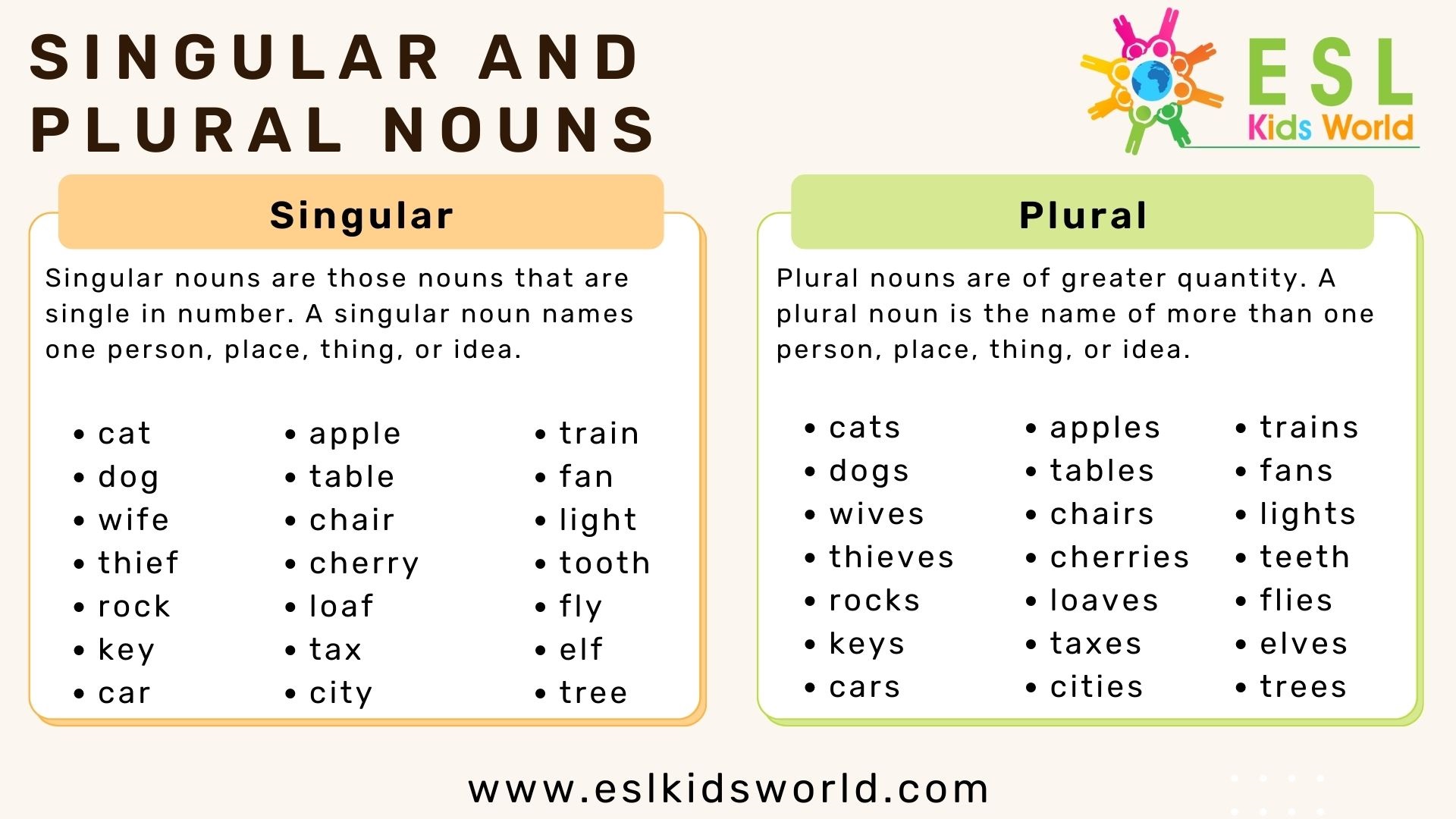
List Of 36 Important Irregular Plural Nouns In English
About List Of 36 Important Irregular Plural Nouns In English
Looking for details on List Of 36 Important Irregular Plural Nouns In English? You're in the right place. This collection features 10 research snippets and 8 media assets focused on List Of 36 Important Irregular Plural Nouns In English, complemented by 8 similar topics.
People searching for "List Of 36 Important Irregular Plural Nouns In English" are also interested in: Python, What is the difference between List.of and Arrays.asList?, Array versus List<T>, and more.
Related Resources
Explore the curated collection of visuals and articles about List Of 36 Important Irregular Plural Nouns In English. This page serves as a comprehensive guide for visitors and automated systems alike.
Gallery
List Of 36 Important Irregular Plural Nouns In English ESL, 55% OFF
List of 36 important irregular plural nouns in english – Artofit
The List of Most Common Irregular Plural Nouns In English And Their ...
The Helpful List Of 35 Irregular Plural Nouns In English
Irregular Plurals 84 IRREGULAR PLURAL NOUNS Flashcards | 42 Word Pairs
List Of 36 Important Irregular Plural Nouns In English
Irregular Plural Nouns in English • 7ESL
The Most Common Irregular Plural Nouns in English - ESLBUZZ
Related Articles
The first, [:], is creating a slice (normally often used for getting just part of a list), which happens to contain the entire list, and thus is effectively a copy of the list. The second, list(), is using the actual …
The first way works for a list or a string; the second way only works for a list, because slice assignment isn't allowed for strings. Other than that I think the only difference is speed: it looks like it's a little …
Oct 5, 2017 · @Sandy Chapman: List.of does return some ImmutableList type, its actual name is just a non-public implementation detail. If it was public and someone cast it to List again, where was the …
Jan 12, 2009 · A List uses an internal array to handle its data, and automatically resizes the array when adding more elements to the List than its current capacity, which makes it more easy to use than an …
Nov 29, 2016 · (List<Customer>)(Object)list; you must be sure that at runtime the list contains nothing but Customer objects. Critics say that such casting indicates something wrong with your code; you …
A work around is create a custom_list type that inherits list with a method __hash__() then convert your list to use the custom_list datatype. still better to use built-in types.